
30 Days to a can be easier to approach when you start with a few practical basics.
- Belief Identification: This is about tackling those nagging thoughts that hold you back. * “What’s one negative thought you have about your ability to lose weight? Write it down, then ask yourself: ‘Is this *really* true? What evidence do I have to support it?’” * “Identify a belief that’s preventing you from taking action. Dig a little deeper - where did this belief come from?” * “If a friend was facing the same challenge, what encouraging words would you offer them? Now, say those same words to yourself.”
- Visualization: This is about creating a clear mental picture of your desired future. * “Imagine yourself one month from now, feeling healthy, confident, and happy. What does that *actually* look like? Engage all your senses.” * “Visualize yourself successfully navigating a challenging situation related to your weight loss journey. How do you handle it?” * “Create a detailed mental image of your ideal self - how they dress, how they move, how they feel.”
- Self-Compassion: This is about treating yourself with kindness and understanding - seriously. * “Write down three things you appreciate about yourself, *regardless* of your weight or appearance.” * “If a loved one was struggling with a similar challenge, what would you say to them? Now, say those same words to yourself.” * “Practice a simple affirmation, such as ‘I am worthy of love and happiness,’ or ‘I am capable of achieving my goals.’”
- Celebrating Wins: Acknowledging your progress, big or small. * “Write down one NSV you’ve experienced this week and take a moment to genuinely celebrate it!” * “Reflect on a time you resisted temptation and feel proud of yourself - you earned that!” * “Share your success with a trusted friend or family member - let them know you’re feeling good!”
- Reframing Negative Thoughts: Changing the way you think about challenges. * “Instead of saying ‘I failed,’ say ‘I learned something valuable about myself and what works for me.’” * “When you experience a setback, ask yourself, ‘What can I learn from this experience? How can I do things differently next time?’” * “Reframe a negative situation as an opportunity for growth - it’s a chance to build resilience.”
Building Habits and Finding Your Resilience (30 Days to a)
Having a framework is a great start, but it’s not enough on its own. You need to build habits and develop the ability to bounce back when things get tough. Habit stacking - linking a new healthy habit to an existing one - is a fantastic technique. For example, “After I brush my teeth in the morning, I will drink a glass of water.” Implementation intentions - “If X, then I will Y” - are also incredibly powerful. “If I feel a craving for unhealthy food, then I will take a short walk.” And don’t forget the importance of reward systems - positive reinforcement can go a long way in keeping you motivated. Finally, it’s important to remember that setbacks will happen. Don’t beat yourself up over them. Mindfulness techniques, like taking a few deep breaths, can help you manage cravings and emotional responses. Cognitive restructuring - challenging those negative thoughts - is another valuable tool. Remember, struggling doesn’t mean failing; it simply means you’re human. Normalize setbacks; they’re a normal part of the process.
Tracking & Support
While the scale isn’t the ultimate measure of success, tracking something that matters to you can be helpful. Consider tracking your energy levels, mood, sleep quality, and even how your clothes are fitting. Journaling is a great way to record your progress and reflect on your thoughts and feelings. There are also plenty of habit tracking apps available (many offer free trials - a useful tool for visualizing your consistency). And don't underestimate the power of having someone to lean on. Accountability is key. Surround yourself with a supportive network of friends, family, or online communities.
Focus on the part that solves the problem
In a topic like Mindset and motivation for weight loss, the strongest starting point is usually the one you will notice and use right away. That is often more helpful than adding extra features too early.
Before spending more, it is worth checking the setup, upkeep, and learning curve. Small hassles matter here because they are usually what decide whether something stays useful or gets ignored.
It is easy to underestimate how much clarity comes from removing one unnecessary layer. In practice, trimming one complication often does more for 30 Days to a Stronger You than adding one more feature, one more product, or one more clever workaround.
Where extra features get in the way
Another easy trap is copying a setup that made sense for someone with a different routine, budget, or tolerance for maintenance. In Mindset and motivation for weight loss, that mismatch is often what makes a promising idea feel frustrating later.
A lot of options sound great until you picture them in a normal week. If the setup is fussy, the routine is easy to forget, or the maintenance is annoying, the appeal fades quickly.
There is also value in keeping one part of the process deliberately simple. Readers often do better when they identify the one decision that carries the most weight and make that choice carefully before they chase smaller optimizations. That keeps momentum steady and usually prevents the topic from turning into clutter.
What makes the choice hold up
A better approach is to break 30 Days to a Stronger You into smaller decisions and solve the highest-friction part first. Testing one practical change usually teaches more than trying to perfect everything in a single pass.
Leave a little room to adjust as you go. A setup that works in one budget range, season, or routine might need a small change later, and that is usually normal rather than a sign you got it wrong.
If this topic still feels crowded or overcomplicated, that is usually a sign to narrow the decision, not a sign that you need more noise. One careful adjustment, followed by honest observation, tends to teach more than another round of abstract tips.
How to keep the routine manageable
A grounded next step is usually better than a dramatic one. Pick one realistic change, see how it works in normal life, and let that result guide the next decision.
The version that holds up best is usually the one you can live with on an ordinary day. That often matters more than the version that only feels good when you have extra time, energy, or money.
That is why the best next step is often a modest one with a clear upside. You want something specific enough to act on, flexible enough to adjust, and practical enough that you would still recommend it after the first burst of enthusiasm fades.
What matters more than the sales pitch
Another useful filter is asking what you would still recommend if the budget got tighter, the schedule got busier, or the setup had to be easier for someone else to manage. The answers to that question usually reveal which advice is durable and which advice only works under ideal conditions.
If you want 30 Days to a Stronger You to hold up over time, choose the version you can actually maintain. That can mean spending less, leaving out an attractive extra, or simplifying the setup so it fits ordinary life.
You do not need the flashiest answer here. You need the one that fits your space, budget, and routine well enough that you will still feel good about it after the first week.
A practical way to move forward
Readers usually get better results when they treat advice as something to test and refine, not something to obey perfectly. That mindset creates room for real judgment, which is often the difference between content that sounds smart and guidance that is actually useful.
When you are deciding what to do next, aim for the option that reduces friction and gives you a clearer read on what matters most. That is usually how 30 Days to a Stronger You becomes more useful instead of more complicated.
In a topic like Mindset and motivation for weight loss, manageable almost always beats impressive. If something is simple enough to keep using, it is usually doing more real work for you.
Keep This Practical
A stronger mindset is built through evidence. Keep one promise to yourself today, notice the follow-through, and use that proof to support the next decision.
Tools Worth A Look
These resources fit readers who want reinforcement for the mindset and follow-through work described above.
- Are You Ready to Lose Weight?: Having The Right Mindset For Your Weight Loss GoalsChair Yoga for Weight Loss and Toning: Complete Guide to Look and Feel Better in Just 10 Minutes a DayWeight Loss Motivation: The No-Diet Guide to Manage Your Weight With Small Steps and AffirmationsWeight Loss Challenge Journal: 90 Day meal and exercise planner - Cute motivational weight loss tracker for womenThe Power of Discipline: How to Use Self Control and Mental Toughness to Achieve Your Goals: Walter, Daniel
Some of the links on this page are Amazon affiliate links, which means I may earn a small commission if you make a purchase through them. As an Amazon Associate, I earn from qualifying purchases.
Related ReadingMore from Think Lean Live Strong
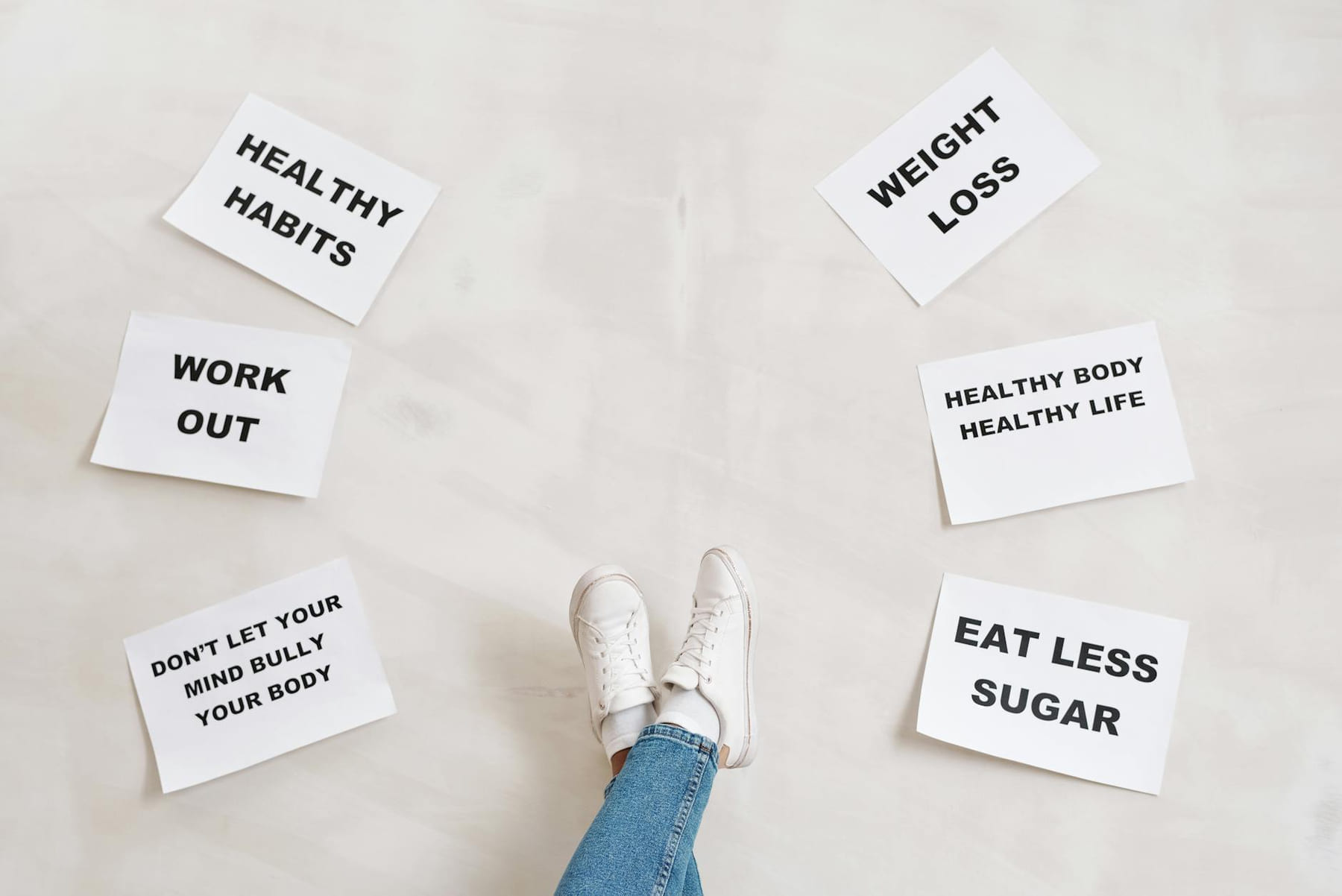
Conquering the Weight Loss Mindset
Negative Thought Evidence For Evidence Against More Realistic Thought “I’m going to fail at this.” I’ve struggled with weight loss before. Past attempts haven’t.

30 Days to a Stronger Mindset
30 Days to a can be easier to approach when you start with a few practical basics. This challenge is built around four core pillars: Affirmations, Gratitude.
30 Days to Shift Your Weight Loss Mindset
Accountability is a cornerstone of any successful journey, and it’s especially important when it comes to weight loss and mindset shifts. It's not about judgment.